MOVE · BUILD · RECOVER · 1020 VIENNA

Strength Lab · Before your first class

A little know-how.
A stronger start.

What to bring, what to expect and what we mean when we say, “now rest”. You do not need to know it all before you arrive. That is what your coach is for.

Arrive 10 minutes earlyMeet your coach. Tell us it is your first class, and tell us about your injuries/restrictions.

What to bringWater, a small towel and clothes you can move in.

Classes are in EnglishWe start together. No late entry possible.

Jump straight to a section

Start with your feet

Grip socks.
Comfortable clothes.
You are ready.

Grip socks are our first choice.

Barefoot training is not allowed. Grip socks are available to purchase at the studio.

Prefer shoes? Bring a clean pair of flat-soled indoor shoes, such as barefoot shoes or Converse trainers.

No street shoes in the training area. Ideally, leave running shoes and soft, heavily cushioned trainers at home. We want a stable base to lift from.

If you use prescribed footwear or orthotics, discuss your training footwear with your physician first, then mention their advice to your coach before class.

How the class works

A plan. A coach.
Time to find your feet.

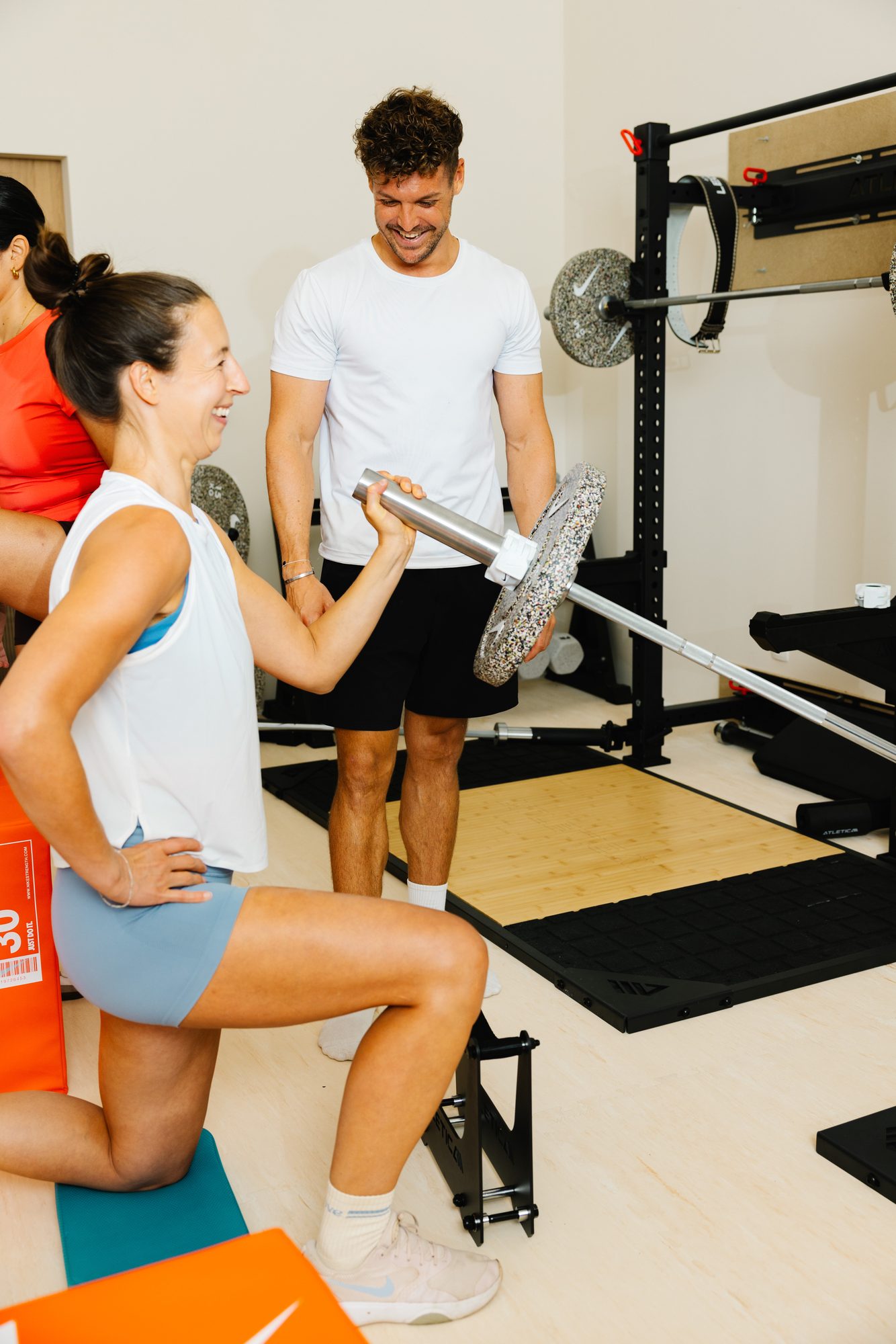
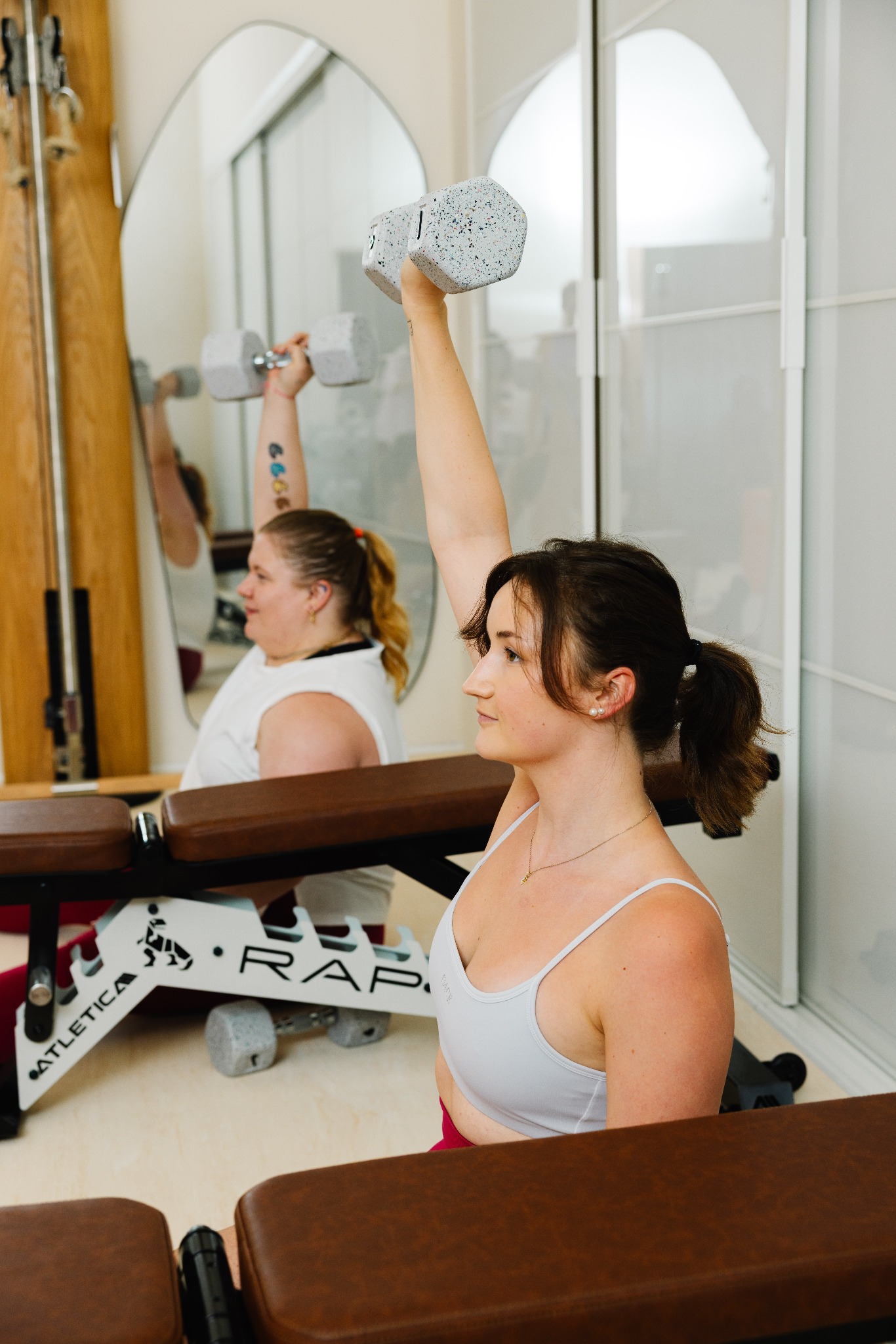
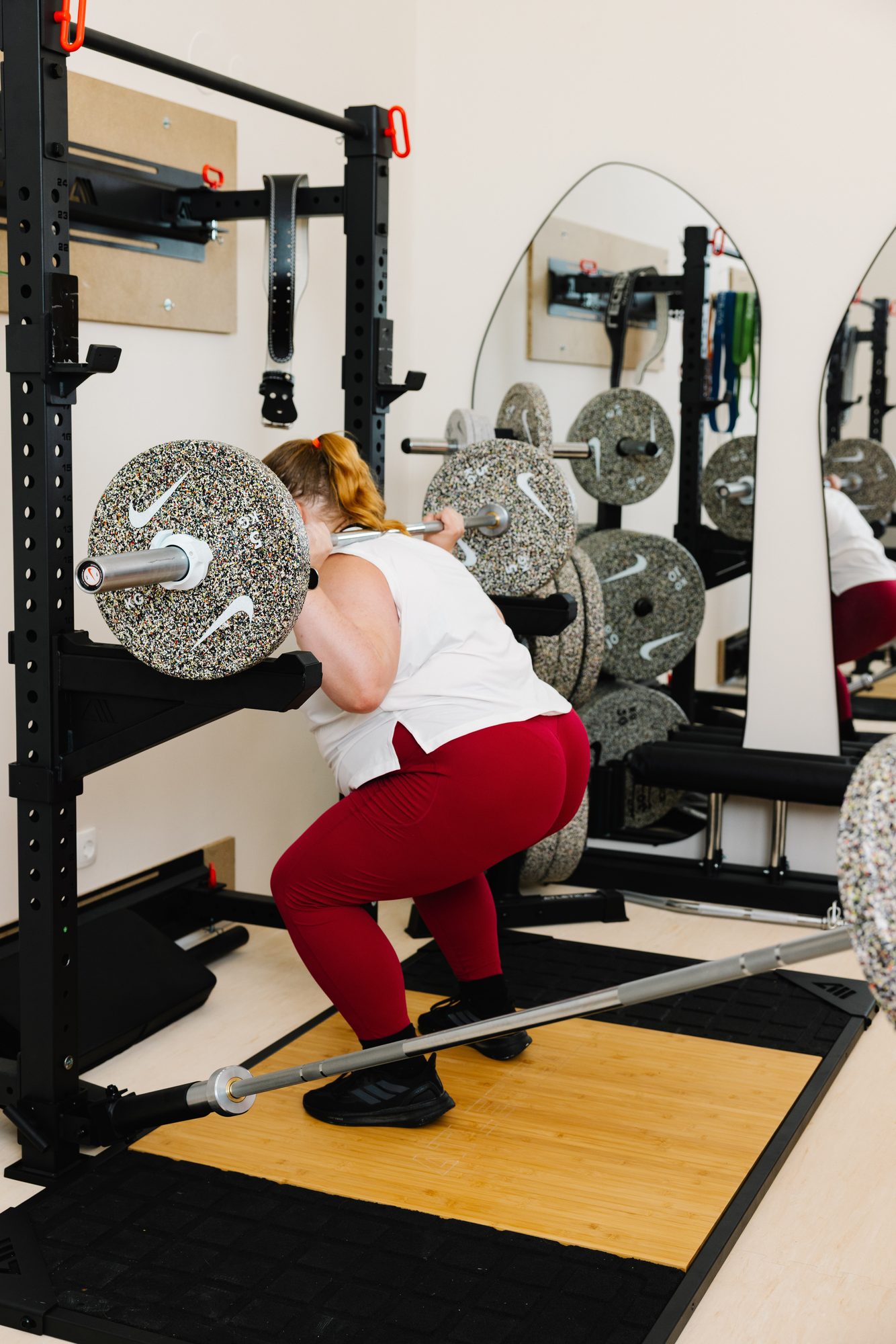
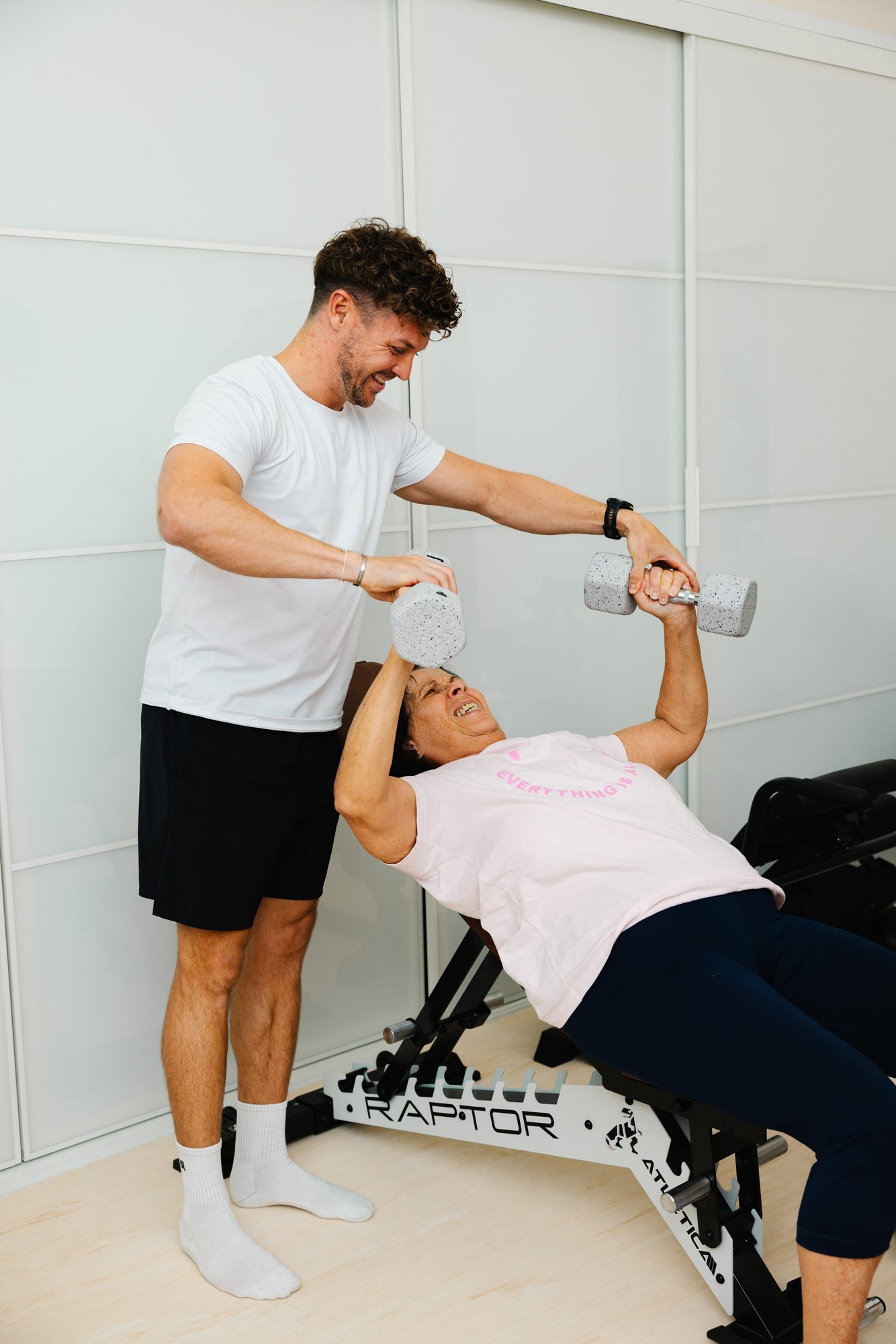
55 minutes. Two stations. 3 strength exercises per station, 3 laps around each station. You bring yourself, we bring the plan.

  1. 01

    Meet the movements

    Your coach explains the session and helps you choose your set-up. Tell them about anything that might affect your training before the warm-up starts.

  2. 02

    Warm up and practise power

    Start with mobility and movement preparation, followed by a short power block. There are alternatives to jumping. Practise the option that suits you today.

  3. 03

    Lift, rest, repeat

    Follow the reps and rounds prescribed on the screens and at your stations. The timer organises the session. It does not mean you keep lifting every second. Finish your set, put the weight down safely, and rest until EVERYONE in your station is ready to move.

  4. 04

    Move on together

    While you rest, observe the next exercise spot you are meant to move to. When you see the people there finish and put their weights down safely, and everyone in your station is ready, you can move on together. Ask for help with equipment changes. Make a note of your weights and reps so you have a starting point next time.

Yes, the waiting is on purpose

Finished your set?
Excellent. Do nothing.

Rest is part of strength training.

This is strength training. It is not HIIT, a race or a competition to see who can keep moving longest. The session includes time to recover so you can put useful effort into your next set.

Our room is compact on purpose. For pure strength training, minimal movement around the room is required. To avoid causing traffic jams, once you have put your weights down safely, stay in your exercise spot. Have a sip of water, rest and watch for the next spot to become free. Move on when everyone in your station is ready, keeping the walkways and other people’s lifting space clear.

Contemplate the meaning of life. Enjoy the music. A tiny dance on the spot is welcome if you are well clear of the weights and anyone lifting. No bonus burpees required. Properly chilling is a very good use of this time.

Why the pause? In a small eight-week study of 21 trained men, three-minute rests produced greater strength gains than one-minute rests. It supports making room for recovery, but does not tell us the perfect rest time for every person or exercise. Follow your station’s rhythm.

Your lifting field guide

A few basics.
A lot less guesswork.

These are things to learn together. Ask the question, even if you think everyone else already knows.

Injuries/restrictions

Something we
should know?

You do not need a perfectly uncomplicated body to train. You do need a plan that fits the one you have.

Tell your coach what you are feeling, what makes it better or worse, and any advice or restrictions you have been given. These are conversations to have, not exercises prescribed for a diagnosis. Contact us before booking if you are recovering from surgery, a recent injury or are unsure whether a group class is suitable.

Talk to us before class ↗
A useful way to start

“I have ___. It currently feels like ___. This movement bothers it ___. My physio or doctor has advised ___.”

SpineBack pain, disc issues and sciatica

Tell your coach

Tell us about pain travelling into your leg, any tingling or weakness, and which positions affect symptoms. A disc finding on a scan does not, by itself, tell us what you can lift.

Discuss your options

Discuss a lighter load, a shorter comfortable range or a supported variation. Practise the agreed movement unloaded first. Do not push through increasing radiating pain or new neurological symptoms.

NHS: slipped disc ↗

SpineScoliosis and spinal fusions

Tell your coach

Let your coach know about your curve, any fused levels, surgery dates and current restrictions. A scoliosis curve does not need to be “straightened” during class. Your comfortable position may not look perfectly symmetrical.

Discuss your options

After fusion, get return-to-training advice from your surgical or rehabilitation team. Bring restrictions on loading, movement and impact. We can discuss supported positions and smaller ranges, but will not try to create movement through a fused segment.

NHS: adult scoliosis ↗

After surgery: Royal National Orthopaedic Hospital guidance. Restrictions and recovery times are procedure-specific.

KneesKnee pain, arthritis and previous knee injuries

Tell your coach

Tell us about front-of-knee pain, arthritis, meniscus or ligament injuries, swelling, giving way, and any rehabilitation plan. An old diagnosis and a newly injured knee need different conversations.

Discuss your options

Your coach may explore a shallower squat, a higher seat, a smaller step or less load within your agreed plan. Start with an easy practice set. New locking, significant swelling or difficulty bearing weight needs urgent clinical assessment before training.

NHS: osteoarthritis and exercise ↗ · NHS: knee warning signs

HipsHip pain, impingement and hip replacements

Tell your coach

Tell us whether discomfort is at the front, side or back of the hip and which movements bring it on. Mention any replacement or operation and the restrictions given by your surgical team.

Discuss your options

Discuss adjusting stance, squat depth or the exercise itself. Do not force a deep position through a pinch to match someone else. Practise a comfortable unloaded version first. After surgery, follow your own rehabilitation milestones rather than someone else’s timeline.

NHS: osteoarthritis and exercise ↗

GripWrist, hand and elbow discomfort

Tell your coach

Mention pain with gripping or leaning on your hands, previous fractures, tendon problems, or numbness and tingling. Explain whether the discomfort changes with the position of your wrist.

Discuss your options

Ask about a lighter load, a different handle or a more neutral wrist position. Your coach can help explore an alternative to supporting weight on a bent wrist. Persistent tingling, loss of grip strength or new symptoms need assessment, not tighter gripping.

NHS: wrist pain ↗

ShouldersShoulder pain, stiffness and instability

Tell your coach

Tell us about painful overhead movements, rotator-cuff problems, a frozen shoulder or a history of dislocation. New pain after an injury, marked weakness or inability to move the arm needs assessment before lifting.

Discuss your options

Once training is appropriate, discuss a comfortable range, lighter load or alternative pressing angle. Do not force an overhead position or use momentum to get through pain. Bring any exercises or restrictions your physiotherapist has given you.

NHS: shoulder pain ↗

Check firstCysts and unexplained lumps

Tell your coach

A ganglion near the wrist and a Baker’s cyst behind the knee are different conditions. Let us know where a cyst is, whether it has been assessed and what symptoms it causes. Have a new or changing lump checked; do not assume it is a harmless cyst.

Discuss your options

Avoid direct pressure or a position that aggravates it while you get advice. Ask about changing your grip or knee range. Do not try to press, pop or massage a cyst away. A spinal cyst needs guidance from your treating specialist; wrist or knee advice does not apply.

NHS: ganglion cyst ↗

Behind the knee: NHS: Baker’s cyst.

ControlHypermobility and joints that feel unstable

Tell your coach

Tell us about joints that give way or dislocate, persistent pain and any diagnosis or physiotherapy guidance. More movement is not always the goal.

Discuss your options

Discuss controlled reps in a range you can actively manage, rather than hanging at the end of your joint range. Start lightly, take the rests and build gradually. Strength work can be useful, but the right starting point and pace are individual.

NHS: joint hypermobility ↗

Plan aheadLow bone density, fractures and recent surgery

Tell your coach

Please contact us before booking. Share previous fractures, an osteoporosis diagnosis and any surgical restrictions. Your treating professional may need to advise whether a group strength class is appropriate right now.

Discuss your options

Ask about load, impact and movement adaptations before class, particularly after a spinal fracture. We will not assume jumping or the usual barbell version is suitable. Your coach works within the guidance you bring; the class does not replace rehabilitation.

Read our bone-density guide ↗

Good to know

New to lifting?
You belong here.

Soma Co.’s dog mascot holding a dumbbell and waving
01Do I need strength-training experience?+

No. You can start here. Tell your coach it is your first class so they can explain the setup and help you choose suitable weights and variations. Experienced lifters can work with a greater challenge in the same session.

02Is every class full body?+

Yes. Each daily plan covers the major movement patterns, including squatting, hinging, pushing and pulling. You do not need to attend on specific days to cover different body parts.

03How heavy do I have to lift?+

Heavy is individual. Start with a weight you can move with control, then work with your coach to find a useful challenge. We gradually build from there. There is no requirement to match anyone else’s weights or lift to complete failure.

04Why do the exercises repeat?+

Repeating a plan lets you learn the exercises and see your progress. Each day has its own full-body plan, repeated weekly through the training block. You can compare what you lifted, how many reps you completed and how the movement felt.

05Can I join if I have an injury or low bone density?+

Contact us before booking so we can discuss your needs and the adaptations available. Recent injuries, fractures or a diagnosis of osteoporosis may require individual guidance from your treating professional. A group class cannot replace rehabilitation or a personalised treatment plan.

06Can I combine it with Reformer Pilates?+

Absolutely. Reformer Pilates and strength training complement each other. Build a routine that gives you time for both, with recovery between demanding sessions. Our Unlimited Studio Memberships make it easy to include the different Labs.

07What should I know before my first visit?+

Classes are taught in English. Bring water, a small towel and clothes you can move in. Tell your coach about your injuries/restrictions before class. Arrive at least 10 minutes early to meet your coach and get settled. We start on time and cannot admit late arrivals.

08How do I book or cancel?+

Book and manage your place in Eversports. Cancel at least 24 hours before class. Late cancellations, no-shows and late arrivals forfeit the session. Check the terms shown with your booking.